Eating my words... to an extent


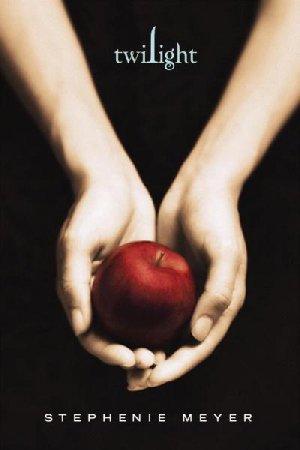
So, here we are. I have finally succumbed to the almost viral phenomenon that is the Twilight saga. Whilst trying to decide what I could do to change the English Communication's program for 2010/2011, I was encouraged to go and watch New Moon with friends. After watching that film, my sister-in-law to be was adamant that I should watch the Twilight film so that I was familiar with the original storyline. Watching both of these films, I suddenly gained insight into what I could do with the first term unit for the Year 11, 2010 cohort of girls.
As an English teacher, I think it is essential that everyone should be able to read something for enjoyment. Yet, they should also have the skills and the insight to be able to critique and engage with the content of an author's work. However, before I launch into my views on Stephenie Meyer's work, I need to clarify that my concern regarding the proliferation of the Twilight saga amongst the young women I teach was not that they were enjoying a series (frankly I am thrilled for any of them to be reading at all, so it doesn't really worry me what they are reading). Rather, I was concerned that they were so besotted with the concept of Bella and Edward's relationship that they did not seem to look past the largely superficial romantic elements. After seeing the films, I became convinced that there was much in the storyline to be analysed.

Ultimately, the result of my film based exposure to the story of Bella and Edward was the birth of the unit Sugar vs. Spice: The portrayal of women's roles in relationships throughout popular culture. My vision for this unit, was for students to look beyond the lovey dovey surface of the Twilight books and to search for deeper understanding of what the novel projects about the role women have to play in relationships, namely through the character of Bella.

In order to prepare myself for the upcoming unit, I settled myself in to read all four books. Immediately, I had to concede that the books were better than I had expected. From the beginning, there were a variety of structural elements that caught my attention. Initially, Meyer's development of the story hinted at the use of non-linear techniques, although, for the most part the story was linear and largely formulaic - by the end of the fourth novel the formulaic element had been eliminated but I don't believe this was to Meyer's advantage, rather she moved rapidly into overly dramatic, nonsensical waffle. Despite the fact that I constantly felt like I knew what was coming, I was pleasantly surprised that Stephenie Meyer seemed to be actively attempting to broaden the vocabulary of her audience. Whilst I have read a variety of criticisms of the novels that argue the vocabulary appears forced and unnecessary, I would have to think that any novel/written work that extends a teenager/adults vocab bank should be applauded for it rather than decimated. 

Her central characters do lend themselves to be embraced by readers, however, I do not necessarily believe that they are well-developed. Over the space of four novels, I did not really feel like I learnt anything new about the characters. Rather, I felt like I was simply a passive viewer of what seemed to be inevitable. Given the scope of the series, I felt cheated by Meyer as I believe that she could have easily done more to let me into the psyche of not only her money makers but also the side characters who I felt had a lot more to offer.

Despite these issues, the books have ultimately allowed for a surprising amount of discussion amongst my students and I. With the term now finished, I do have to concede that Stephanie Meyer's novels have allowed me to engage in some excellent analytical debate with my English Communications students. While they still enjoy the books, something which I honestly did not want to ruin for them, they are now far more aware and critical of elements that they feel should be explored more openly by the numerous girls and women who are, at times, clearly obsessed with the novels and the relationship that dominates the storyline. 

While I know that the books are often ridiculed and seen as pieces of friviolous teen pop culture unworthy of study, I sincerely hope that more highschool teachers take the time to discuss the concepts in class. This way, more young women may be able to see that the relationships in Twilight are not necessarily the type to yearn for or that they should be wishing to emulate.  

"The Girl with the Dragon Tattoo"

Well, what can I say?

Firstly, a huge thank you to Julie-Anne for giving me a copy of this book for Christmas. Secondly, a sincere apology to her (and myself) for taking so long to read the book. Thirdly, and lastly, my sincere thanks to the author, Steig Larsson, and my acknowledgment that he was gone far too soon.

His first novel in The Millenium Trilogy had me on the edge of my seat. Despite the fact that the book is 533 pages long, I essentially completed the novel in less than 10 hours - 3-4 hours in the hair salon and another 3-4 hours sitting on the couch today - and if it had not been for the fact that I had dinner in the oven, I would have raced to Borders to pick up the next two books!

Larsson has managed to write a crime thriller that leaves you guessing whilst at the same time becoming incredibly attached to the central characters. His attention to detail is to be commended. Whilst I was invited into the text to see everything through the meticulous third person narration, I was not limited to the inane description that so often becomes the fall back of crime authors. This description contained throughout the book seemed to actively encourage me to visualise the characters, the scenery and the developments in the plot. At times, this proved so powerful that I came close to putting the book down. Certainly, after one incredibly disturbing scene, my facial expressions were obviously so distressed that my fiance asked me what was wrong and if I was ok!

I won't go into the plot itself for fear of spoiling it for anyone. However, I will state the following quite plainly.
You would have to be an absolute fool to consider watching the soon to be released film adaptation of this book. After reading it, I am convinced that there would be no possible way to effectively capture this novel - certainly it would not be possible to fit everything in, nor would certain elements get past the censors. Read it, don't waste your time watching what is sure to be a mediocre Hollywood masscare of a well-written, well-developed storyline.

Curl up in a comfy chair and get to know Henrick, Mikael, Lisbeth and the many other intriguing characters through your own imagination. I firmly believe that it will be much more satisfying.

A tale of innocence lost


Those who know me well, realise that I am not exactly a film afficianado and as such prefer to read rather than watch film adaptations of books. Unfortunately, when a novel hits the silver screen before you have even had a chance to read the story there is often the problem of finding out what happens due to publicity and general discussion by movie goers. This was certainly the case for me recently with the book/film The Boy in the Striped Pyjamas" by John Boyne. A large majority of my students saw the film when it came out, and, for many of them, it prompted a desire to read the book. For me, that meant that suddenly I became acutely aware of what actually happened in the film/novel before having had the opportunity to read it myself.

However, at the beginning of these summer holidays, I made myself sit down and read the story and was pleasantly surprised that, while I knew full well what would happen at the end, the book still held my attention. Most of note, was the poignant way in which Boyne captured the sense of innocence in his central male character. His innocence, and in many cases ignorance spawned from a lack of explanation by his elders, tugged at my heart as it demonstrated such a stark contrast with the world being explored.

I have read a variety of books over the years dealing with the perspective of Jewish adults and children who experienced the Holocaust; however, this was the first time I saw the situation through the eyes of someone deemed to be on the 'other' side. Albeit, in this case, the 'other' had absolutely no understanding of what was actually going on around him.

While I realise that Boyne's intention in the novel was no doubt to instill in younger readers an awareness of how society and humankind can be so cruel and violent, I felt in many instances that the story became somewhat preachy and focussed too heavily on pushing the moral element of the book. However, this may simply be due to the fact that when it comes to a literary insight into WWII, I prefer to read works that are non-fiction rather than somebody's fictional interpretation of events.

Still, I think that as a children's book this one is simple to read, although the issues can interest anyone in any age bracket, and may prompt readers to then search for something more substantial and historically accurate.

"Kay Scarpetta: Doctor, Lawyer, Indian Chief"


Continuing my fascination with the crime genre, my discovery of author Patricia Cornwall while I was at university threw me headlong back into a much loved concept of my childhood memories of reading: the joy of being able to follow a story and it's characters through an extended series.


For most of my life I have been a fan of a variety of series (starting somewhat inauspiciously with Ann M. Martin's Baby Sitter's Club series and followed shortly after by Francine Pascal's Sweet Valley Twins, Sweet Valley High and eventually Sweet Valley University series). While I certainly would not try to claim that these, nor any other series I have come across to date, can be viewed as serious literature, what they have instilled in me is an appreciation for the ability of good serial writers to constantly develop their characters in a way that not only makes the reader want to find out what happens next, but have them groaning with frustration and anticipation when they discover that they have to wait for the next piece of the journey to be published.


Patricia Cornwell has certainly achieved this for me on many ocassions through her gradual, yet natural development of Dr Kay Scarpetta in her Scarpetta series. This series focuses on the professional and personal life of a forensic pathologist whose career beginning in the early 80s significantly challenges the stereotypes of the Virginian society in which she lives. As the series progresses the reader becomes closer to not only the female protagonist but also those around her.


As the series progresses Cornwell, through Scarpetta, addresses a variety of social issues, ranging from broken marriages, homosexuality, unrequited love and terrorism, all the while thrilling her readers with tales of heinous crimes.


For those who love shows like CSI, this is the crime series for you as it focuses less on the prosectution of offenders and spends more time exploring the crime, finding and then interpreting the clues.


For a full list of the Scarpetta series to date, see the link below:


You Have The Right To Remain Silent - Exploring The World of the Legal Thriller


From my early teens onwards I have been an avid fan of the crime genre. This interest most likely can be traced to my formative years of reading where I devoured the adventure/detective tales of Enid Blyton and my brief love affair with Nancy Drew.


However, once I reached highschool I discovered that my love of the adventure/detective genre I had enjoyed as a child could be rediscovered in a genre with a bit more punch. My first experience with the crime genre was with the popular works of John Grisham. In a small space of time I found myself exploring the intriguing and often moving storylines of The Client, The Pelican Brief and A Time To Kill.


As I progressed through highschool, and as Grisham released more novels, I found many more of his novels that were not only entertaining but dealt with various social issues, such as racism, social inequity, environmental sustainability and the ability of big business to corrupt the moral fabric of a community and the individual.


Set almost exclusively in the Southern States of the USA, Grisham explores what is often a complex and delicately balanced social construction. He has an ability to create characters that disrupt the social norm for a greater purpose, although they also usually embody some interesting stereotypes, whether gender based or cultural.


There have been few novels of Grisham's that I have not enjoyed, with the exception of A Painted House. In this novel, Grisham moves away from his usual exploration of the courtroom and the legal system and instead attempts a family saga. The characters and the plot were at best insipid and it was ultimately a struggle to finish the book. While I am a strong believer in the need to try new things, I think this was one occasion where the writer should have stuck with what he knows and does best.


Over the years many of John Grisham's novels have made the leap to the big screen. Whilst they have often drawn big name actors, the only one that I enjoyed anywhere near as much as the book would be A Time To Kill and I have often used it to reinforce the continued use of racial tension as a basis for literary inspiration. As can be seen by anyone familiar with both pieces of work, this piece from Grisham has some interesting parallels to Harper Lee's classic, To Kill A Mockingbird.


For anyone who enjoys the TV shows Law and Order or it's many off-shoots I strongly recommend that you dip into the extensive back catalogue of John Grisham novels that are available.


See link below for a complete catalogue of his work to date.


My introduction to the female protagonist


Once upon a time, there were four sisters: Meg, Jo, Beth and Amy. They loved their mother and they loved their father and like all good young ladies of the time they did whatever they were told by the society around them. Right? WRONG!


Louisa May Alcott's classic tale, Little Women (and the sequel Good Wives, which is often published as Part 2 of the former) has, I believe, an unfortunate title. One could be, and should be, forgiven for thinking that the title of both books indicates an antiquated tale of young girls being prepared for marriage, and while this could be seen to be the case after a perfunctory glance, in truth the novel creates a story that both subtly and overtly challenges the accepted role of women that is constructed in the social context of the novel.


Josephine March, better known as Jo, is a character whose dominant personality and commitment to overstepping the social boundaries that aim to constrict her have remained a source of inspiration to me ever since I first read the book whilst in Grade 3. At the time I certainly did not realise how significant a character she was, nor how important she was as a female protagonist (given the time period in which Alcott created her). However, even then she reached a place in my mind that has allowed me to recognise her in a great many novels I have read in the 17 years following our first introduction.

While the society constructed throughout the novel is still obviously stacked in the favour of men, the way Jo conducts herself remains a testament to female writers of Alcott's time who have set a precedent for female protagonists to make the most of their situation and maintain their personal integrity, albeit in ways that today's modern Western woman would find decidely inane.

I truly believe that this is a novel that not only instilled an appreciation of a strong female protagonist (and eventually antogonist) but also ignited my love affair with American literature.

For anyone wanting to flirt with the classics but can't bring themselves to wade into the English stalwarts of the Bronte sisters or Jane Austen, Little Women may be the book you have been looking for.

Why am I doing this?


My aim is for this blog to achieve two purposes:

1. To allow me to document and comment on the books that I have read/am reading so that I can engage with them in a more organic way (not to mention be able to remember stuff about them later on)
2. So that hopefully my students can share in the joy of reading by looking through these posts and maybe, just maybe, find some novels, etc that might prompt them to give something other than just Twilight a go (and yes, it is in this space that I make a solemn promise to finally read the thing so that I can actually make a legitimate comment on the novel. Who knows, I may need to eventually retract the negative comments I have made about it in the past).

So, as I progress through this activity, I hope that it will not end like many other well intentioned expeditions I have previously embarked upon and that I will maintain the blog in a way that explores the world that I spend so much of my time in, a world that is constantly reiventing itself and presenting what can at times seem like situations that are not to be contemplated, all through the whims of the talented and , on occasion, the not so talented writers of this world both past and present.

For anyone reading this, I hope you find some inspiration to find a book that you will never forget.